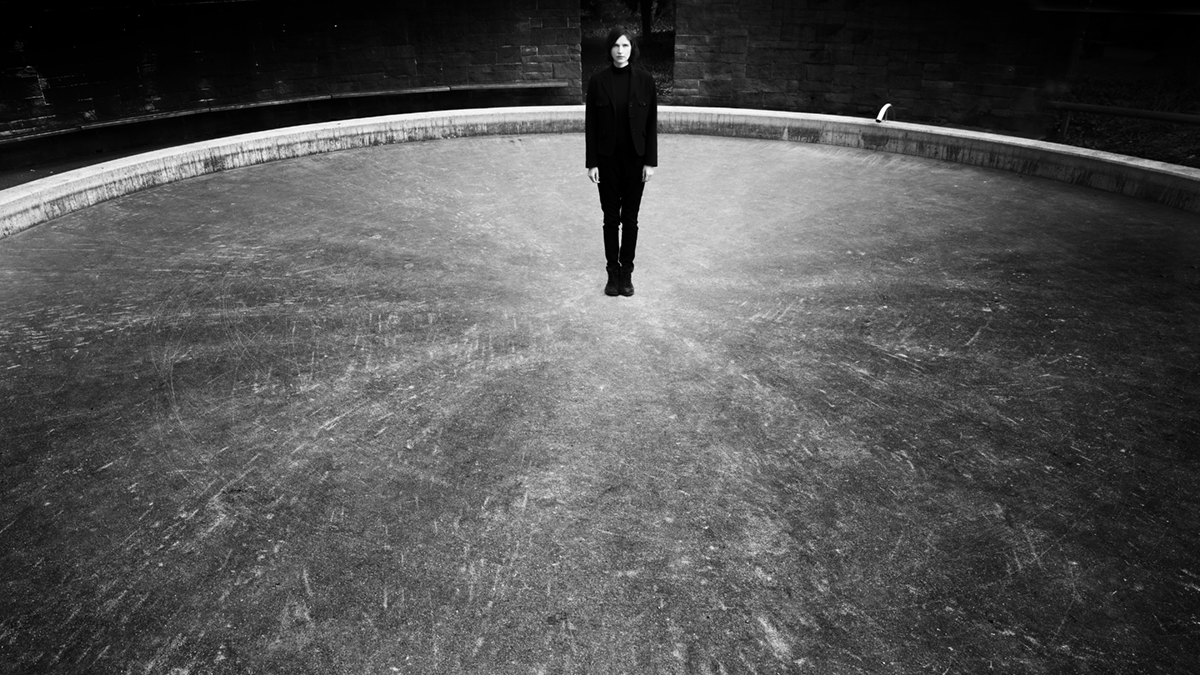
Conceptual: Honorable Mention 2025 (amateur)
Circumstances Affecting the Heat of Sun’s Rays by Ursa Majeure [photography duo] (Austria)
ENTRY DESCRIPTION
“The sphere is the most uniform of solid bodies since every point on its surface is equidistant from its centre. Because of this, and because of its ability to revolve on an axis without straying from a fixed place, Plato (Timaeus, 33) approved the judgement of the Demiurge, who gave the world a spherical shape. Plato thought the world to be a living being and in the Laws (898) stated that the planets and stars were living as well. In this way, he enriched fantastic zoology with vast spherical animals and cast aspersions on those slow-witted astronomers who failed to understand that the circular course of heavenly bodies was voluntary.
In Alexandria over five hundred years later, Origen, one of the Fathers of the Church, taught that the blessed would come back to life in the form of spheres and would enter rolling into Heaven.
During the Renaissance, the idea of Heaven as an animal reappeared in Lucilio Vanini; the Neoplatonist Marsilio Ficino spoke of the hair, teeth, and bones of the earth; and Giordano Bruno felt that the planets were great peaceful animals, warm-blooded, with regular habits, and endowed with reason. At the beginning of the seventeenth century, the German astronomer Johannes Kepler debated with the English mystic Robert Fludd which of them had first conceived the notion of the earth as a living monster, ‘whose whalelike breathing, changing with sleep and wakefulness, produces the ebb and flow of the sea’. The anatomy, the feeding habits, the colour, the memory, and the imaginative and shaping faculties of the monster were sedulously studied by Kepler."
From ‘The Book of Imaginary Beings’ (1967/1969), by Jorge Luis Borges
AUTHOR
Sophie-Luise Passow (*1994, Vienna) studied photography in the class of German artist Gabriele Rothemann and graphics and printmaking with Swedish artist Jan Svenungsson at the University of Applied Arts, Vienna.
+
Urte Laukaityte (*1992, Vilnius) was educated at the University of Cambridge for her BA, attained her MSc at the University of Edinburgh, and is a PhD researcher at UC Berkeley. Urte spent the year 2022/23 as a Solitude fellow at the Akademie Schloss Solitude.
=
Ursa Majeure (*2023, Stuttgart) was born Athena-style from the combined heads of a two-part organism wandering the forests around a 1700s schloss. If experience were summative, she would have a three-decade long photographic career by now, despite being birthed in January of last year. She has grand plans for her future as a photographer, including experimenting with different techniques—state-of-the-art as well as historical. A crucial feature of her practice is the symbiosis of photography and text, or, more broadly, the fusion of art and science—the perennial holy grail of contemporality.
back to gallery