ENTRY DESCRIPTION
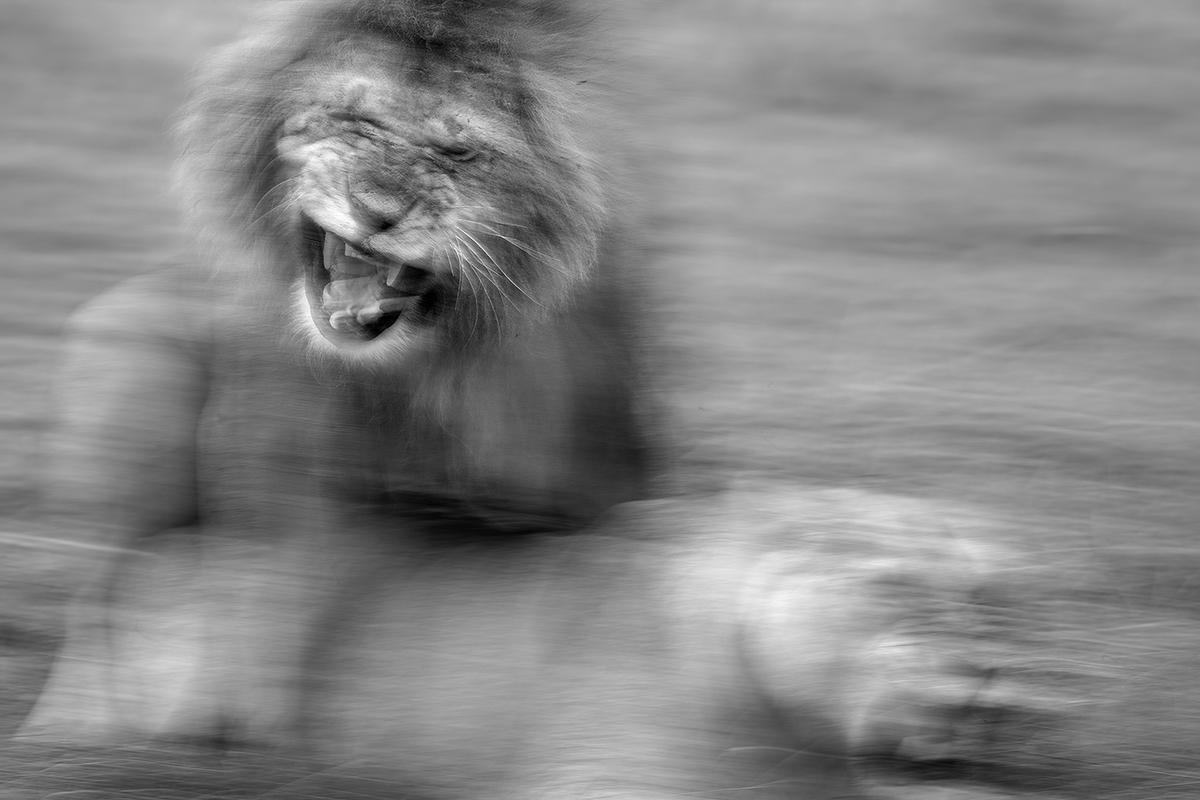
In the grasslands of Kenya’s Maasai Mara, two lions shared a fleeting moment of connection—a pause within the rhythm of life that defines the wild. Amidst the intensity of their interaction, the male lion’s face softened into an expression that seemed almost human—peaceful, content, and vulnerable.
I wanted to convey not the power or dominance usually associated with lions, but a quieter emotion rarely seen in these apex predators. The challenge was to transform a raw behavioral scene into an artistic impression—something that spoke more of feeling than of form. To achieve this, I used a slow shutter speed of 1/10 second, allowing the movement of both lions and the surrounding grass to blend into a flowing abstraction. The technique softened the directness of the moment while preserving its emotional essence.
The resulting image is a balance of motion and stillness, strength and tenderness. The male’s open mouth and closed eyes, blurred slightly by motion, evoke not aggression but release—a rare glimpse of tranquility in the life of a wild creature. The soft streaks of color surrounding them represent time itself, moving ceaselessly even as life pauses for an instant.
In that moment, the savanna seemed to breathe with them—a reminder that even in the harshest landscapes, there exists beauty in vulnerability, and serenity within chaos.
AUTHOR
I am a nature and wildlife photographer based in Seattle. My goal in photography is to create images that resemble paintings. While creating an excellent painting can take hours or even years, a photograph can be captured with just one click of the shutter. This is what fascinates and motivates me, and I have been photographing for over 20 years. Recently, I was invited to delve into wildlife photography, which has become even more captivating and inspiring, as it reveals a world where the cycle of life and death unfolds every moment. During this new journey, I discovered that 3S (Slow Shutter Speed) shooting is an incredibly effective tool for making my photos look like paintings—not only because of its painterly appearance but also because each image tells its own story. I believe this effect occurs because The camera's image sensor accumulates photons for 100 to 300 times longer compared to typical high-shutter-speed shooting.
back to gallery