ENTRY DESCRIPTION
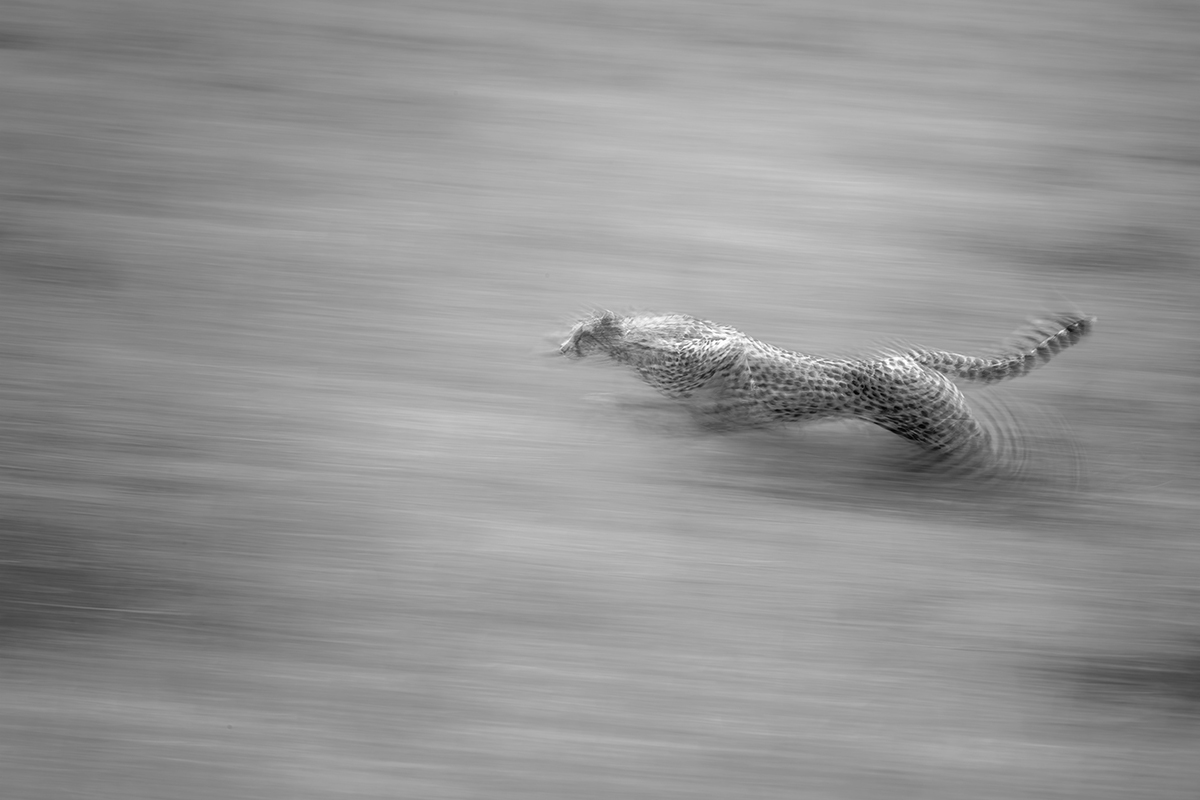
In Kenya’s Maasai Mara, a cheetah burst into motion, accelerating across the plains with astonishing speed and precision. The chase unfolded in seconds—a silent storm of muscle, instinct, and grace. As it pursued a Thomson’s gazelle through the tall grass, the surrounding world seemed to dissolve into streaks of green and gold.
To capture this fleeting moment, I used a slow shutter speed of 1/10 second, intentionally blending motion and background through the 3S (Slow Shutter Speed) technique. Instead of freezing the scene, I wanted to express the feeling of velocity—the sensation of life unfolding at the edge of physics. Every frame became a dance between focus and blur, presence and abstraction.
The result is not merely a record of a hunt, but a visual metaphor for energy itself. The cheetah appears almost weightless, suspended in a river of color, its form shaped by the speed it creates. The blurred background mirrors the flow of wind, time, and inevitability.
Moments later, the chase reached its natural conclusion, but this image preserves the heartbeat that defines the wild—the exquisite balance between beauty and brutality, control and chaos. In that split second, nature became pure motion, and motion became art.
AUTHOR
I am a nature and wildlife photographer based in Seattle. My goal in photography is to create images that resemble paintings. While creating an excellent painting can take hours or even years, a photograph can be captured with just one click of the shutter. This is what fascinates and motivates me, and I have been photographing for over 20 years. Recently, I was invited to delve into wildlife photography, which has become even more captivating and inspiring, as it reveals a world where the cycle of life and death unfolds every moment. During this new journey, I discovered that 3S (Slow Shutter Speed) shooting is an incredibly effective tool for making my photos look like paintings—not only because of its painterly appearance but also because each image tells its own story. I believe this effect occurs because The camera's image sensor accumulates photons for 100 to 300 times longer compared to typical high-shutter-speed shooting.
back to gallery